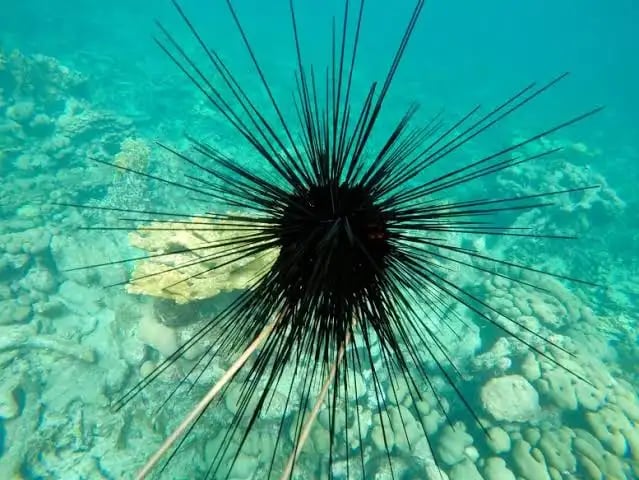
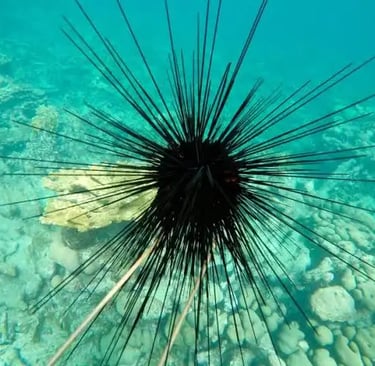
SPIKY-The Long-Spine Urchin (Diadema setosum) is a striking echinoderm found throughout tropical Indo-Pacific reefs. Recognized by its jet-black body and extremely elongated spines—often exceeding 30 cm in length—this species plays a vital role in maintaining reef health.
Physical Characteristics
This urchin features a spherical body covered with venomous spines that serve as an effective defense against predators. The spines are not only sharp but also contain mild venom, making handling dangerous. A distinctive orange ring around the anus and five white spots on the test help identify the species.
Ecological Role
Long-Spine Urchins are herbivorous grazers, feeding primarily on algae. By controlling algal growth, they prevent coral overgrowth and promote reef resilience. Their nocturnal feeding habits reduce competition with diurnal species.
Behavior & Adaptations
Equipped with a water vascular system and tube feet, these urchins move slowly but efficiently across reef surfaces. Their spines provide shelter for small fish and invertebrates, adding structural complexity to the ecosystem.
Conservation & Care
While common in the wild, they require stable water conditions in captivity and should never be handled due to venomous spines. Their presence in aquariums aids in algae control but demands caution.